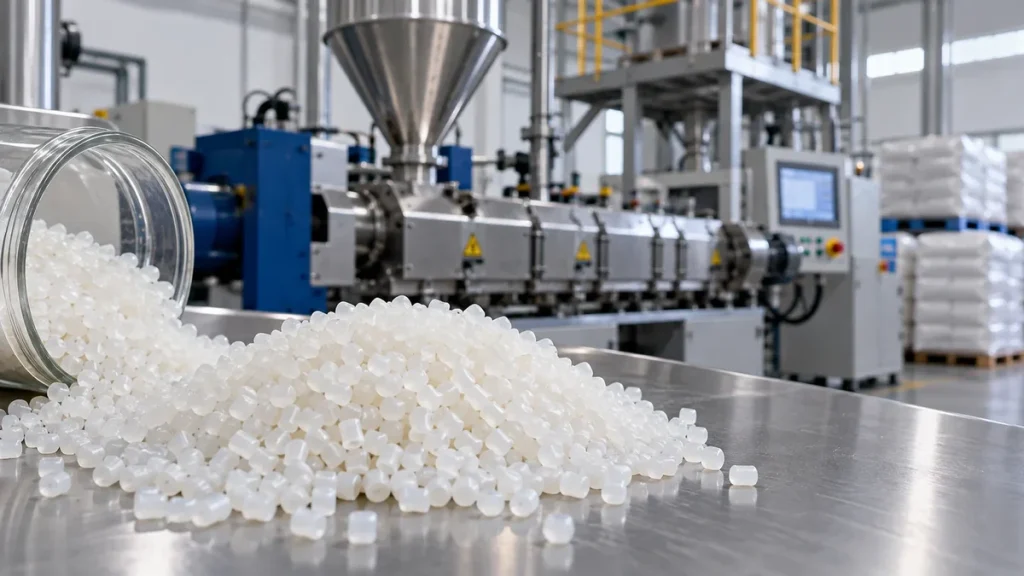
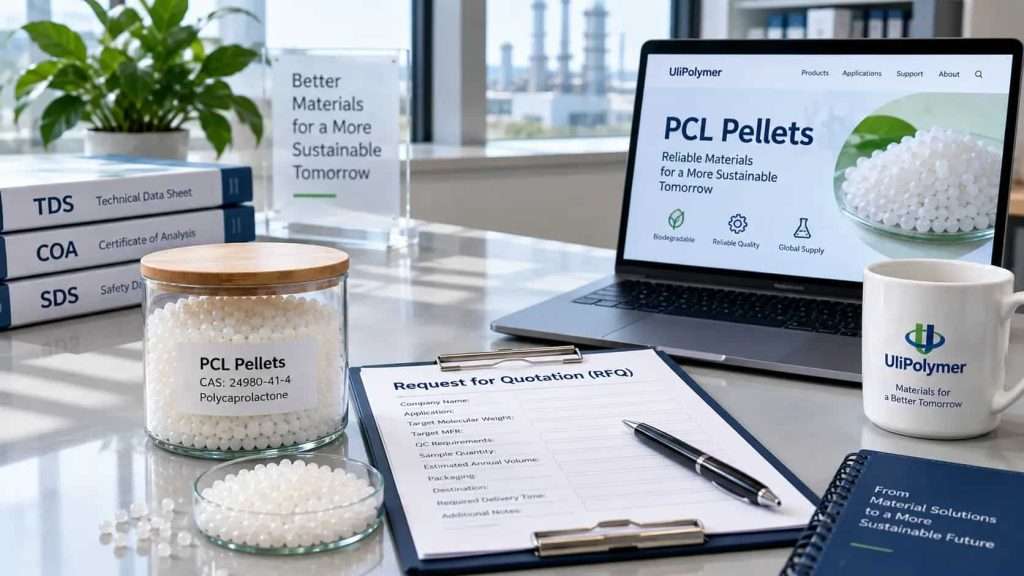
PCL Polymer, also known as Polycaprolactone (CAS 24980-41-4), has gained significant attention as a versatile and biodegradable polymer. Its unique combination of flexibility, low melting point, and biocompatibility makes it an attractive choice for industries ranging from 3D printing to medical devices. Unlike conventional plastics, PCL Polymer can degrade naturally over time, reducing environmental impact and meeting the growing demand for sustainable materials.
But how does PCL Polymer compare to other biopolymers? And why is it increasingly preferred by manufacturers? This article explores its advantages, applications, and buying options, helping professionals and hobbyists alike make informed decisions.
I. What is PCL Polymer?
PCL Polymer (Polycaprolactone) is a biodegradable aliphatic polyester derived from ε-caprolactone. Known for its low melting point (around 60°C) and excellent flexibility, it can be easily processed using extrusion, injection molding, and 3D printing. Its CAS number, 24980-41-4, guarantees that the material meets international chemical standards, making it a trusted choice for industrial and laboratory applications.

PCL Polymer vs Polycaprolactone
The terms “PCL Polymer” and “Polycaprolactone pcl” are interchangeable. Both refer to the same chemical, with “PCL Polymer” being more commonly used in industrial contexts, and “Polycaprolactone” often appearing in scientific literature. Regardless of terminology, it offers consistent performance across a wide range of applications.
II. Advantages of PCL Polymer over Other Biopolymers
Compared to other popular biopolymers like PLA, PBS, or PHA, PCL Polymer offers unique advantages:
1. Biodegradability
PCL Polymer is fully biodegradable under composting or environmental conditions. Its slow degradation rate compared to PLA makes it ideal for applications that require longer service life, such as medical implants and controlled-release systems.
2. Ease of Processing
With a low melting point and excellent flow properties, PCL Polymer is easy to process. It can be extruded, injection-molded, or 3D printed with precision, allowing manufacturers to create complex shapes with minimal energy consumption.
3. Biocompatibility
One of the most important features of PCL Polymer is its biocompatibility. It is widely used in medical applications, including tissue engineering scaffolds, biodegradable sutures, and drug delivery systems. Patients benefit from safe, implantable devices that naturally degrade over time without adverse reactions.
4. Mechanical Performance
PCL Polymer has high flexibility and toughness compared to other biopolymers. While PLA can be brittle, PCL maintains elasticity, making it suitable for applications that require repeated bending or stress resistance.
5. Blending and Customization
PCL Polymer can be blended with other polymers, additives, or nanoparticles to modify its properties. This makes it highly adaptable for specific applications, whether for improving mechanical strength, enhancing biodegradability, or achieving specialized aesthetic effects.
III. Key Applications of PCL Polymer
The versatility of PCL Polymer allows it to serve a wide range of industries:

Medical Industry: Tissue engineering scaffolds, biodegradable implants, drug delivery carriers, and sutures.
3D Printing: Prototypes, functional models, customized components, and educational tools.
Consumer Products: Biodegradable packaging, eco-friendly household items, and toys.
Industrial Applications: Blended with other polymers for specialty plastics, adhesives, and coatings.
Ulipolymer as a PCL Polymer supplier provides options like polycaprolactone pellets bulk, polycaprolactone pellets for sale, and variable grades priced according to quality (polycaprolactone pellets price), meeting both small-scale and industrial demands.
IV. How to Buy PCL Polymer
When sourcing PCL Polymer, consider the following:
Check Authenticity: Ensure the product has the correct CAS number (24980-41-4) and meets quality standards.
Determine Quantity: Decide between bulk purchases for manufacturing or smaller quantities for prototyping.
Supplier Verification: Buy from reputable suppliers who provide certificates of analysis (CoA). You can polycaprolacton buy online or through verified distributors.
Form Selection: PCL Polymer is commonly available as pellets for easier processing in extrusion, molding, or 3D printing.
V. Comparison Table: PCL Polymer vs Other Biopolymers
| Feature | PCL Polymer | PLA | PBS | PHA |
| Biodegradability | Yes | Yes | Yes | Yes |
| Melting Point (°C) | ~60 | 150-160 | 110-115 | 160-180 |
| Flexibility | High | Medium | Medium | Medium |
| Biocompatibility | Excellent | Medium | Medium | Medium |
| Processability | Easy | Easy | Moderate | Moderate |
| Typical Applications | Medical, 3D Printing, Blends | Packaging, 3D Printing | Packaging, Films | Packaging, Films |
VI. Conclusion
PCL polymer (polycaprolactone) offers unparalleled versatility, combining biodegradability, biocompatibility, easy processing, and mechanical elasticity. Compared to other biopolymers, it excels in applications requiring flexibility, controlled degradation, and safe human contact.
Whether used in medical devices, 3D printing, or eco-friendly consumer products, PCL polymer is a reliable, sustainable, and adaptable material. Contact us to purchase authentic CAS 24980-41-4 polycaprolactone directly to ensure consistent quality.