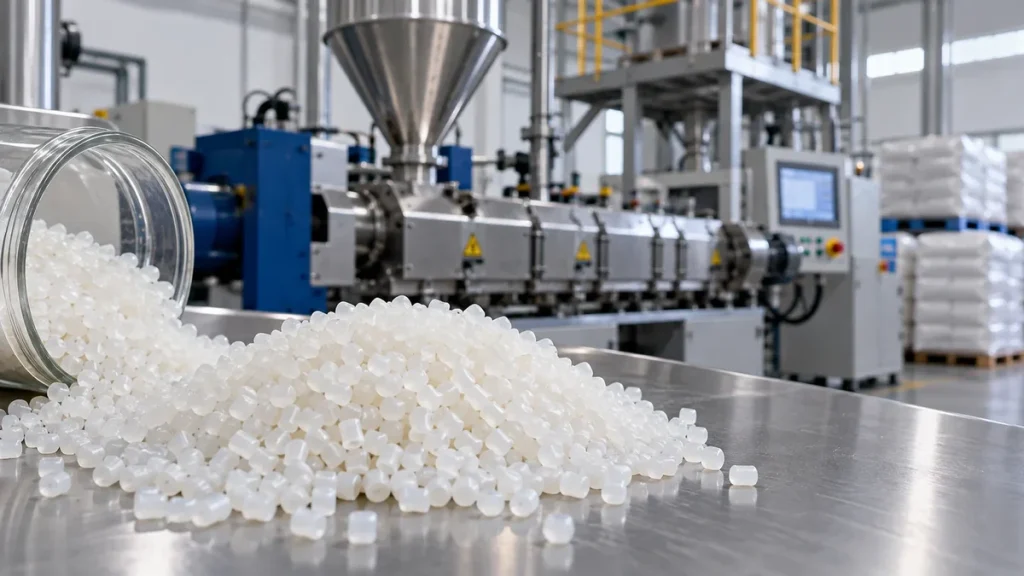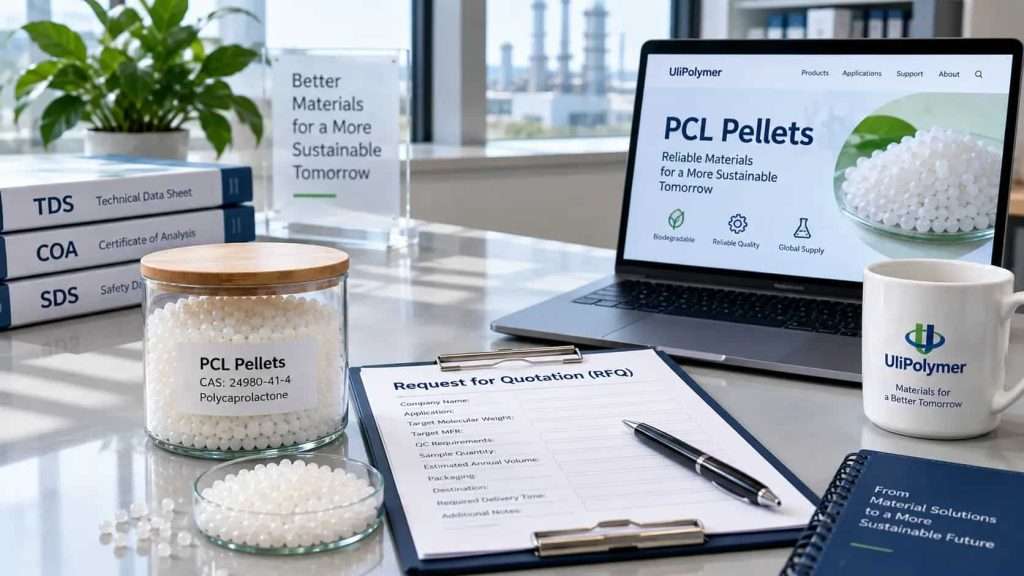
聚己内酯 (PCL) has become a highly promising characteristic material in the field of 3D printing due to its unique properties such as low melting point, biodegradability and excellent biocompatibility. From precise repair in clinical medicine to safe and creative manufacturing in children’s education, from high-end industrial customization to organ and tissue engineering research, its application scenarios are constantly expanding, and related technological innovations are continuously emerging, providing core support for the upgrade of 3D printing applications in multiple industries. Recent research achievements and industrialization progress both at home and abroad have further highlighted the diverse application value and broad development prospects of polycaprolactone in the field of 3d printing.
Polycaprolactone is an aliphatic polyester. Compared with the mainstream PLA and ABS materials in the current 3D printing field, its significant advantage lies in its low melting point of only 60℃ – far below the 180℃ melting point threshold of PLA and the 220℃ melting point threshold of ABS. This feature not only reduces the energy consumption and operational difficulty of printing equipment, but also makes low-temperature safe printing possible.

Polycaprolactone pcl in children’s education scenarios
In children’s education scenarios, 3D printers based on polycaprolactone can completely avoid the safety hazards brought by high-temperature print heads. Meanwhile, the material itself is non-toxic and has good biocompatibility, making it an ideal choice for children’s creative manufacturing. Dutch companies such as 3D4Makers have launched high-purity polycaprolactone printing filaments. Despite having a higher unit price than ordinary materials, they have still gained market recognition due to their special application value.
Polycaprolactone polymer in the biomedical field
In the biomedical field, the 3D printing application of polycaprolactone polymer is experiencing a technological explosion. Studies have shown that the star-structured four-arm polycaprolactone was synthesized through the ring-opening reaction of ε -caprolactone, and then a cross-linked network was formed by the thiol-acetylene photo-click reaction. The compressive strength of the prepared scaffold can reach (86.1±8.1) kPa, and the photo-curing time is only 20-25 seconds. It has both precise structural control and biomimetic mechanical properties. It can meet the repair needs of soft tissues such as the heart, nerves and muscles. Coby, a recent study published in an international journal also confirmed that the scaffold made by combining polycaprolactone (PCL) with chondrocyte acellular matrix still had a cell survival rate as high as 92.36% after two weeks of in vitro culture, and the deposition of chondroid-specific extracellular matrix significantly increased, demonstrating excellent potential for clinical transformation.
Polycaprolactone is exploring the frontiers of tissue engineering and organ manufacturing
3D printing of 聚己内酯 provides a new path for constructing functional tissues. Research shows that the polycaprolactone fiber scaffold prepared by the automatic navigation single-nozzle electrospinning technology, in synergy with the cell-carrying hydrogel, can achieve a balance between anatomical accuracy and mechanical stability, support the formation of vascularized endothelial patterns, and lay the foundation for organ-level tissue construction. Another study functionalized the polycaprolactone scaffold with hyaluronic acid glycine peptide conjugate, significantly enhancing the material’s hydrophilicity and endothelial cell adhesion and proliferation ability, providing a feasible solution for the preparation of small-diameter vascular grafts. Domestic research has also attempted to combine biological minerals such as turtle shells and eggshells with polycaprolactone for 3D printing of bone scaffolds. By optimizing the proportion of mineral addition and balancing the hydrophilicity, printability and mechanical properties of the material, it provides a new idea for the low-cost preparation of bone tissue engineering scaffolds.
PCL biodegradable polymer in industrial manufacturing and consumer fields
Polycaprolactone 3D printing has opened up unique application scenarios due to its low melting point characteristic. Its printed products can be softened and reshaped by 60℃ warm water, making it easy to correct dimensional deviations or achieve customized assembly, such as heating and reshaping 3D printed rivets for fixation and adjusting the fit of insertable covers, significantly enhancing the flexibility of customized production. Meanwhile, after the synthetic modification of polycaprolactone polyols, polyurethane acrylate oligomers can be prepared, which are used in photosensitive resins for light-curing 3D printing. They feature high transparency, low yellowing, and excellent toughness, making them suitable for high-precision manufacturing requirements such as figurine models, dental models, and high-end decorative items. In children’s education scenarios, 3D printers based on polycaprolactone completely avoid the risk of high temperatures. Coupled with their non-toxic characteristics, they have become an ideal choice for children’s creative manufacturing.
The development prospects of Polycaprolactone CAS 24980-41-4
Industry experts point out that the further popularization of polycaprolactone 3D printing applications still needs to overcome the dual challenges of cost and technological optimization. At present, the unit price of its materials is about 3 to 5 times that of ordinary PLA, which limits its large-scale application. However, in niche fields such as medical implants, high-end customization, and children’s education, its irreplaceable characteristics have formed clear market demands. With the optimization of synthesis processes, the upgrading of composite modification technologies, and the expansion of industrial scale, polycaprolactone is expected to be more widely applied in clinical medical implants, organ-on-a-chip, and environmentally friendly customized products in the future, promoting the continuous upgrading of 3D printing technology towards safety, precision, and greenness.
Polycaprolactone (PCL) is a widely sought-after thermoplastic polyester with well-defined molecular structure and excellent physical and chemical properties; we supply high-quality polycaprolactone pellets with competitive polycaprolactone pellets price for global customers who intend to polycaprolacton buy, and this versatile PCL polymer is applied in diverse fields relying on its outstanding properties.